Desperation

Horse and Groom public-house, right of the mansard roofed building

I find it strange, as a youngster, we only seemed to spend time with my grandparents, and Mom’s brother and his children. I assumed we were from a small family. From researching the family tree, I have found many relatives lived locally in Birmingham, UK and farther afield.

When Mom met Dad in Bridgnorth, Shropshire she was working in the office of Tangyes Ltd., a company making hydraulic and general engines. Dad learned his trade as a tool-maker through an apprenticeship. He went on to learn gas fitting and central heating installation. I guess travelling around may have been how he met his second partner.

Mom told me she got together with my stepdad because he was nice and she was in financial dire straits. I believe he did his best, having a wife packaged with two step sons.

I remember one payday, after my stepfather had gambled most of his cash pay packet away on the horses at the smoke filled bookies, also known as the betting shop and turf accountant, he drank the remainder at the Monarch pub before returning home.

My mother’s protestations were met by his fists causing her to fall down a flight of stairs. A catalyst for Reverend Kerr of Saint Boniface Church to arrange for our escape to a battered wives home in Sparkbrook.

I came across the following newspaper report while researching Mom’s maternal family. It is transcribed from the Birmingham Gazette, Birmingham, West Midlands, England. Monday 06 October 1913

SMASHED WINDOWS.
WOMAN’S PROTEST AGAINST A PUBLICAN’S ACTION.

At the Birmingham Police Court on Saturday a married woman named Mary Ann Edmonds, aged 34, living at 65., Birchall Street, was charged with wilfully breaking two plate-glass windows, of the value £3 10s., at the Horse and Groom public-house, Digbeth.
William ‘Henry Phipps, the licence-holder, said that at six o’clock on Friday night, just after he went into the bar, defendant’s husband came in and called for half a pint of beer. ” He was practically ‘ sober, ” said witness, ” so I served him with half a pint of beer. “
Immediately he was served, witness continued, defendant caused an obstruction outside, causing a crowd to assemble. Witness went out with the intention of getting her away, and immediately after she threw two half-bricks, one at each window.
Defendant in the dock admitted that she did the damage, but said she was driven to desperation. Her husband spent all his wages at this house. They served him until be could not stand, and then had practically to carry him from the house.
On Friday night, as soon as her husband enteral the house, she asked the landlord not to serve him, and said, ” You see the condition he is in.”
Phipps, defendant said, ordered her out of the house as they did not want her there.
Defendant added that she knew she did wrong, but she had four little children starving at home, and in her madness she did not know what she did.
Mr. Hobbis (chairman), recalling Phipps, asked him what he meant by saying defendant’s husband was ” practically ” sober.
Witness: He might have had a little, but he was not drunk.
The Chairman: When yon speak of a man as sober we understand he is sober, but when you say practically sober it is a different thing, and we want to know what you mean exactly. Was he under the influence of drink?
Phipps: None whatever. He walked straight into the house, as if he had come straight from work.
The Bench came to the conclusion that the defendant had cause for great exasperation.
They believed her story, but that did not excuse her for breaking windows. They had come to the conclusion that the case would be met be imprisoning her for one day, which meant that she would be at once discharged.

Monarch pub prior to recent refurbishment

Big Nanny, Hilda May

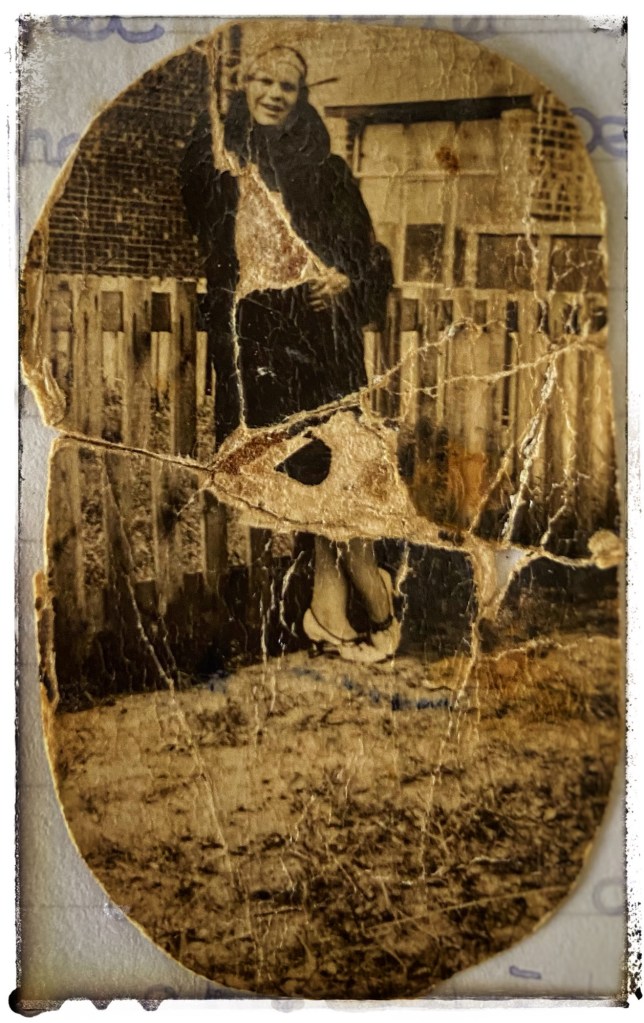
Today, 2 July 2024, ‘Big Nanny’, my maternal grandmother would have been 118 years old. This is the only photograph I have of Hilda May Edmonds, born at the dawn of the 20th century.

According to the 1911 Census of England and Wales, Hilda aged 4 lived at 123 Winson Street in the working class suburb of Winson Green with parents Robert, 39 and Mary, 41, brothers, Willey, 10 and Joseph, 8, and two boarders, James Aspinall, 71 and Margery Grattage, 3.

Hilda’s, Mom, Mary had given birth to five children, two were deceased. Ivy passed when 2 years old in 1901. I have not yet identified the other child.

Approximate location of the house

Robert was employed as an art metal worker making fire screens. According to the 1891 census, art metal work had been his occupation since the age of 19. Robert had a background in metal, hailing from a family of brass founders and casters.

Typical Victorian house plan

The Victorian terraced house no longer stands. It may have been a two up, two down plus attic bedroom facing the street with a rear courtyard containing a communal outside washhouse (laundry), and toilet connected to the sewer, a luxury, at that time for the less well off.

The house was located a hop skip and a jump south west of Winson Green Prison (the last execution was carried out in 1972), City Lunatic Asylum (became All Saints mental health Hospital), City Fever Hospital, and the Birmingham Union Workhouse. The Workhouse site later became Dudley Road Hospital.

Winson Green at the turn of the century

I was unaware of my family’s connection to Winson Green when I was getting industry experience working for six months’ in one of the Dudley Road Hospital kitchens in 1984/85.

Hilda left home to marry Dennis Havelock Jones in 1928.

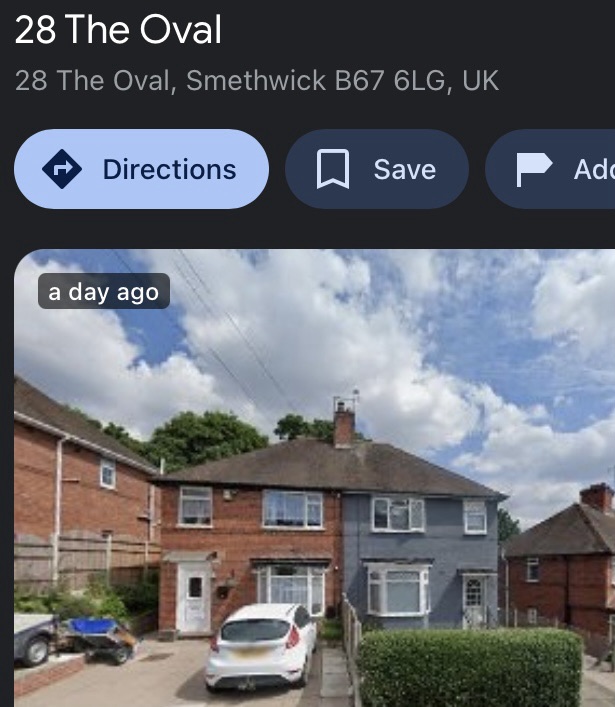
They lived in a 1920s house, 28 The Oval, Smethwick (promounced Smerrick), Staffordshire with children, Norman, Irene (my Mom), Denise, and Frank.

The grey house is no. 28, Google street view

The eldest, Norman passed away due to gastroenteritis when 6 years old in 1934.

My Mom, Irene was born in 1935. This picture was taken on Mom’s first birthday. Mom contracted polio when she was 14 months old.

Mom recounted, before the start of the Second World War, Uncle Ben visited from America. He offered to take the children home with him, away from the anticipated bombing. The family decided to take their chances, the children stayed at home in England. Granddad built an Anderson Shelter in the back garden.

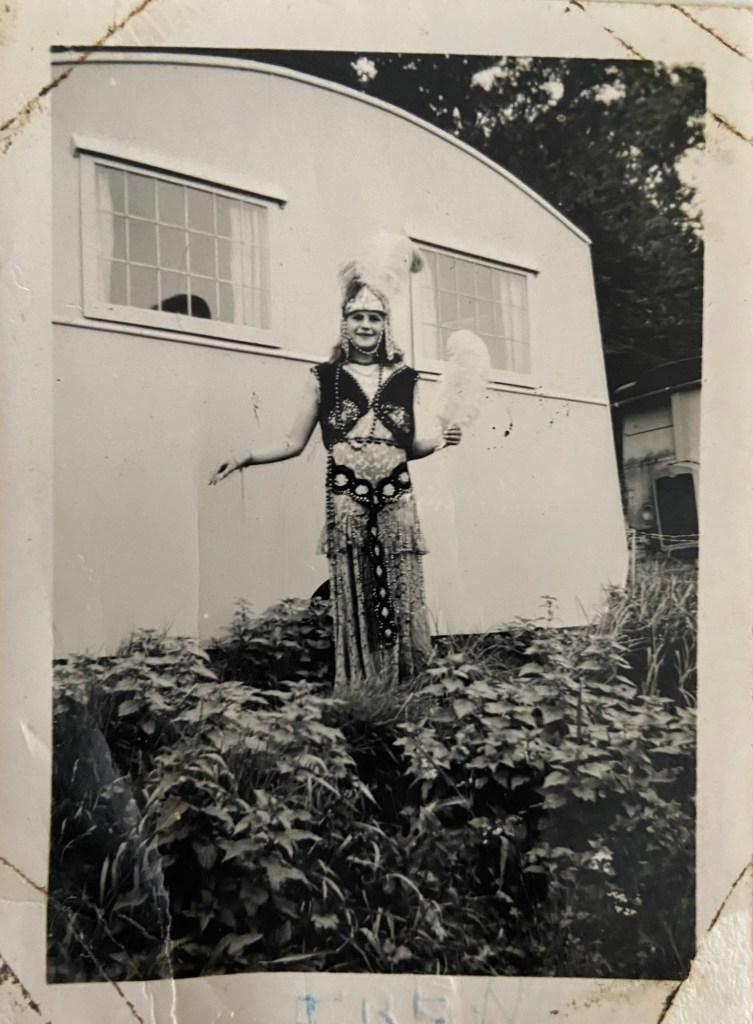
12 year old Mom in fancy dress outside the caravan

After the war, the family enjoyed holidays in a caravan built by Granddad. It was located in Bridgnorth, Shropshire on the bank of the River Severn. My Mom met my father, Trevor there, he had been camping nearby.

Denise’s husband of 4 years went off with another woman in 1962. It was too much for Denise, aged 23 to bear, she gassed herself by putting her head in the oven. My Mom and Uncle Frank found her slumped against the stove.

My Mom told me Nan was devastated by Denise’s death. She refused to leave her bed. My Mom and Dad agreed a grandchild was what Nan needed to lift her spirits.

This is where I entered the story in 1963.

I have only fond memories of my rotund, jolly, loving, type 1 diabetic, Big Nanny living with Granddad and their dog, Sue. I wonder, if Nan ever removed that hairnet and button up tunic she wore over her clothes. Maybe to go out in the blue Morris Minor van with Granddad.

I remember the semi detached house with a tiny entrance hall, a staircase ahead, and the front (best) room off to the left. It was used to receive visitors. My brother and I were not allowed to be in there without adult supervision.

The walls of the room were papered with a toile de jouy pattern.

A white Sylvac hyacinth mantle vase with wire flower holder insert stood on the bay window cill along with cast brass ladies wearing crinoline dresses.

A high back three piece suite, upholstered in dark grey with small burgundy crosses and topped with antimacassars faced a tiled fireplace with a gas fire. There was also a coffee table, hearth rug, and a potted aspidestra atop a tall timber plant stand.

I assume Granddad had modernised the panelled doors by adding hardboard and painting them white. Drive-in ball catches had also been installed. A shelved under stairs storage cupboard was accessed from next to an upright piano. The space had a small stained glass window looking into the lean-to garage at the side of the house.

Next to its door, another led to the kitchen. It was furnished with a large table, a small two seat sofa with wooden arms and green seat and back cushions in front of a fire, a dark red rag rug, a green enamelled gas stove with eye level grill, stainless steel sink with draining board and yellow Formica sliding door cupboards.

Nan would let me light the kitchen’s gas fire using a wooden spill from the pot on the tiled mantle. I was encouraged to help peel vegetables, shell peas and chop mint grown on Grandad’s allotment.

Granddad liked his sausages skinless so Nan would give the skins to me to take to Sue outside. I didn’t tell her, sometimes Sue shared her raw sausage casings with me.

As a treat, Nan would give me ‘a piece in the dip’. She used a long serrated knife with tiny teeth to slice the crust off a white tin loaf then dip its face into the juices of the Sunday roast. I would add ground white pepper and savour each mouthful of this prized gastronomic delight.

There was a huge glazed lean-to at the back of the house accommodating a workshop, toilet, and the laundry gadgets from across the decades including, a copper, washtub, dolly, and mangle. By the ‘60s Nan was using a gas powered washing boiler and an electric cylindrical spin drier. Monday was wash day in the Jones household.

Outside there was an old crock sink mounted on a stand both painted green and filled with red geraniums. A long lawn lined with orange marigolds stretched towards Grandad’s green painted shed and beyond a gate into Mrs Millington’s garden. A washing line stretched as far as the eye could see.

Up the narrow, steep staircase there were three bedrooms and a bathroom. The bathroom had dark brown linoleum floor covering, cream painted walls and gleaming white fittings with chrome taps. The taps, tee shaped from the side were connected through the back of the square porcelain sink and the end of the footed iron bath. The vertically mounted, cross headed taps had small white porcelain discs, indicating ‘hot’ and ‘cold’. There was resistence when turned, emitting grinding screeches followed by soft pops.

The water gushed from the bottoms of the taps with what seemed like the force of fire hoses, even though it took forever to be deep enough before I could climb into the gargantuan steaming vessel. Once inside, the bottom and sides would feel icy against my skin. Also, the enamel was a little rough from eons of scouring with Vim powder.

My last memory of my Big Nanny is from 1969. She was in bed in the best room. It had been brought downstairs as she was ill and there was no toilet inside the house. I took the gift of a dolly I had made from strands of pale blue wool.

Sadly, cancer of the liver got the better of Big Nanny, passing away on 5 January 1970, aged 63 when I was 6. The wool dolly accompanied her to her final resting place in Uplands Cemetary, Smethwick.

Creating

For the past few weeks, I have been wrestling with writing a poem. It is one of the longest so far. Perhaps next week it will finally be ready to share.

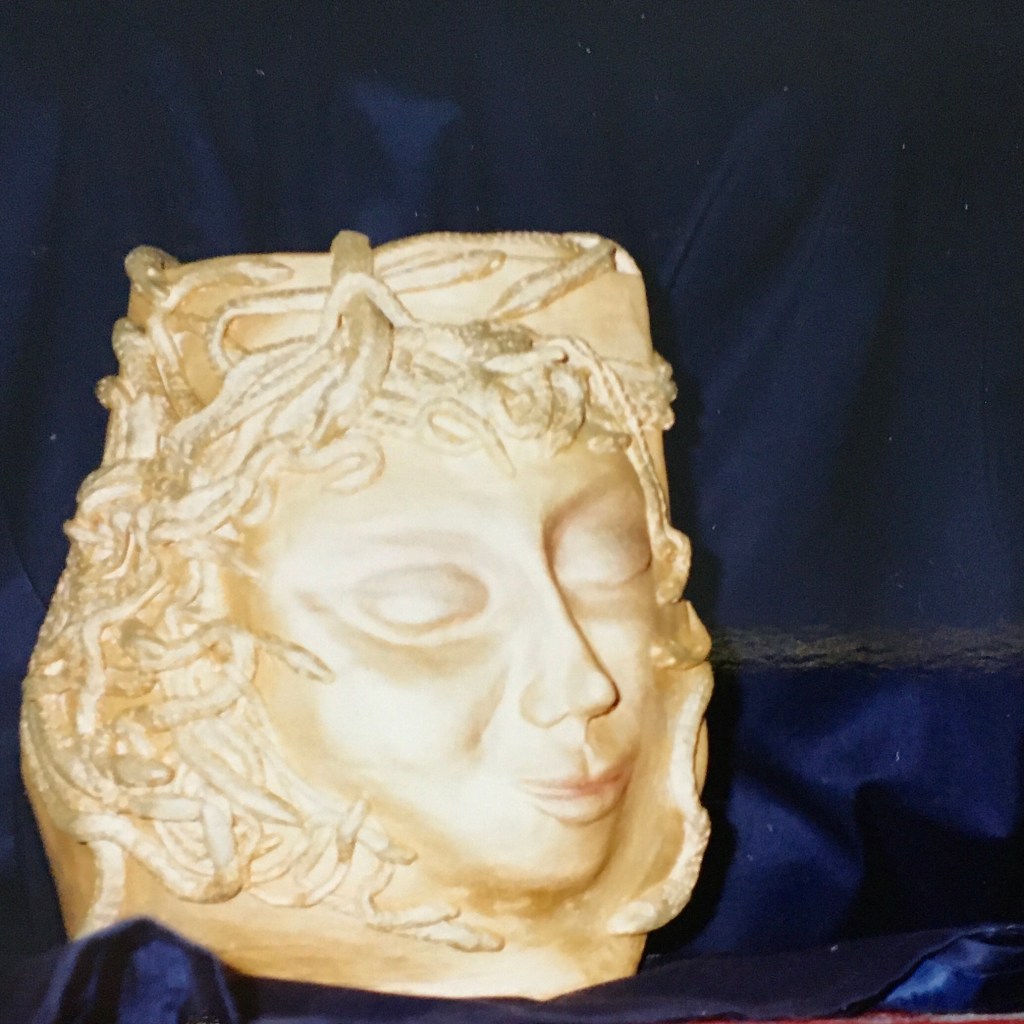
I recently came across these pictures of a young me, mid ‘80s at night school in Birmingham. I was fortunate to be able to go back to study with the person who inspired me to pot at secondary school, Lyn Chatwin.

Part of the base blew off in the biscuit firing of this Medusa inspired coiled creation. I did not risk a second glaze firing, opting to spray paint it instead.

Be, bee

Sitting on the left hand side of George (not the Beatle) Harrison’s English Language class, I recall a grey cloudy day. Typical English weather regardless of the season. 

Individual timber desks with lift up tops and a place for an ink pot with a sliding brass cover were arranged in rows of two. Monica with long brown hair and a Mediterranean complexion sat next to me. It was unusual to have a pupil from America at Harborne Hill Secondary Modern. 

While travelling to work yesterday morning I was cogitating the word live. It brought back this happy school memory from 1979. It was the day I learned about words that sound the same but have different spellings and meanings. There and their is an everyday example that causes some to agonise over which to use in a sentence. 

An in-class competition of which pair of students could come up with the most examples was run. It doesn’t matter if we won or not. Even today I play the homophone identification game in my head. It brings focus to my otherwise  chaotic mind. 
I took the photograph of the bee mural while on an Experimental walk

Malibu Martini Moment

20140114-194845.jpg
Celebrate good times, come on! It is Tuesday, two Malibu Martinis, I’m in a warm and fuzzy memory loop. On this day 16 years ago the temperature at Birmingham International Airport was a chilly 6oC. We had spent the previous week getting our apartment ready to be rented out fully furnished and hosting a family day and a kitchen clearing party. Friends and family rummaged through our drawers and cupboards sadly filling carrier bags. We were greeted in departures by our close friends and too many tears.

KLM had a special offer on its business class flights, we had 96kg of checked in luggage plus double the 18kg hand luggage allowance. As we were moving to the other side of the world we took full advantage of the deal – camera bags, handbags, umbrellas, coats, briefcases, boxes of chocolates and yes, hats with corks; 12 pieces of cabin baggage each.

The expression on the face of the of the check-in staff was priceless, as you can imagine they did not know anything about the the offer so promptly took a copy of the KLM notification we had received. It was a challenge to relinquish our trolley before clearing passport control, thankfully the lounge had plenty of storage.

The other passengers did not have much carry on baggage and the cabin crew saw the funny side of our gargantuan predicament, they assisted us onboard, up the stairs and stowed our personal belongings. On this flight we were travelling light, the furniture, pictures and objet d’arts had left the UK two weeks earlier with Pickfords.

Cheers chink, clink here’s to 30oC in Singapore.

Sore throat memory

20130906-111521.jpg
I had managed to dodge the coughs and colds during this unusually warm Antipodean Winter until this week. My throat feels like I’ve been gargling with broken glass. The last time my throat felt like this I was 10 years old. I remember waking up lying on my back, unable to move anything but my head as I was pinned down in bed by well tucked in stiff, crunchy sheets and blankets.

I opened my eyes a fraction, the ceiling seemed so far away, the highest I’d ever seen. When I turned my head to the right a marble fireplace against brown and cream walls came into view. I could hear the sound of hard soled shoes slapping and squeaking on a highly polished brown Lino floor. To my left and opposite there were other beds in the room and the murmur of people talking in hushed tones. My throat was so sore that it hurt to speak, relief came in the form of a nurse telling me that I needed to eat ice cream and jelly for tea and cornflakes for breakfast.

Having tonsils removed is now a day procedure, for me back in 1973 it involved three days stay in the Birmingham and Midland Ear, Nose and Throat Hospital. A grand Victorian red brick and terracotta tile building in Edmund Street. The Grade II listed building built 1890-91, by Jethro Cossins & Peacock in a classical “Queen Anne” style opened as a hospital in 1891 and closed in 1989.

The image is the front of a card from my family during my stay in hospital.

References:

Birmingham Roundabout
The Victorian Society – Brimingham
Go Historic

Harsh reality

Trees
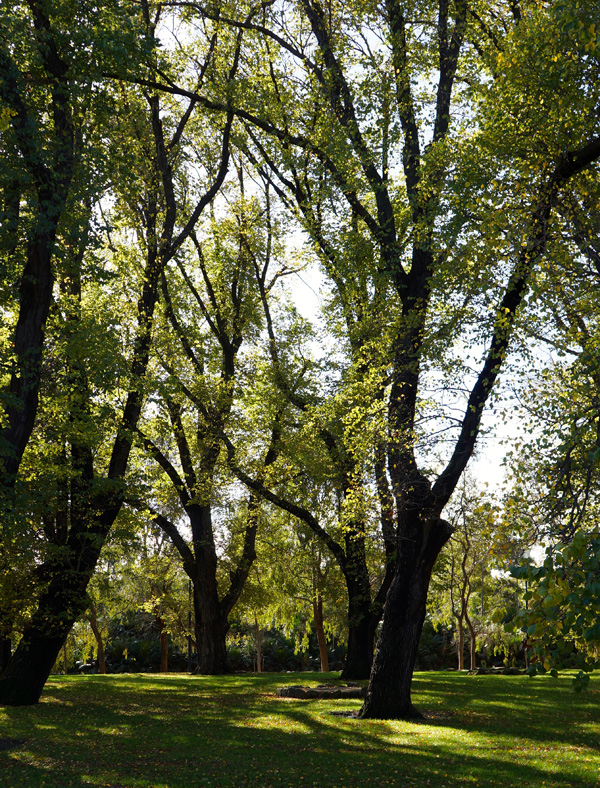
Even though we lived in a south western suburb of Birmingham I felt a strong connection to nature. A chain-link fence ‘protected’ us from the wilds of neighbouring Welsh House Farm, it was a thrill to climb through a gap in the fence, to enter a secret world and to explore the overgrown fields and tumbledown buildings. Life in the grove was pretty uneventful, until one day I was woken up by the sound of unearthly screams. In one swift movement I threw back the bri-nylon sheet, blanket and candlewick bedspread and jumped out of bed.

Cool early morning light shone down the wall from beneath grey cotton curtains emblazoned with red, green, blue and yellow steam trains. Cautiously I peeped out between the curtains, by now the screaming had turned to an unpleasant chugging noise like an impatient lawn mower. I opened the curtains to find a scene of peace and quiet in the back garden. “Eeeeooow zzzzzow” I ran into my brother’s bedroom, the noise was louder, I still couldn’t see anything. I retrieved my slippers and ran to the front door, it was wide open. Gingerly I went out into the hallway of the building. The sounds were deafening, rebounding from wall to floor to ceiling, up and down the stairs making the painted metal balusters sing.

One of the neighbours was standing in the doorway to the front of the flats, I squeezed past her to join my mother and younger brother standing among a disorderly group of onlookers with silent faces gawping at the source of the noise. Just beyond an army of battered, yellow, monster JCB diggers, that weren’t there yesterday, a man wielding a smoke breathing chainsaw was slicing into the bark of my beloved horse chestnut tree. With wide movements he was making cuts into the side of the defenceless tree that had provided tons of conkers for us to collect, pickle, skewer and thread onto strings. In what seemed like a few moments a gruff voice told us to keep back. Obediently we shuffled back a couple of inches. There was a creaking and groaning followed by “snap, whoosh, thunk, rustle” as my friendly giant lay gracefully down.

By tea time the tree’s tangled branches and strong protective trunk lay lifeless on the ground, ready to be loaded onto trucks and taken away. On the following day the diggers removed the stump, churning up the surrounding grass in the process. By the end of the week calm had returned to the grove, however the diggers stood ominously in the spot where I used to evade capture in games of hide-and-seek. A foreboding washed through me as I wept for the loss of my friend.

Five images of Welsh House Farm by Nicklin, Phyllis (1961) (Unpublished images) University of Birmingham: Welsh House Farm

Evolution of my accent

20130515-221312.jpg
In world terms my closest family are from a tiny area on the planet. Dialects within the United Kingdom are diverse and can vary dramatically within a short distance. My father’s family were from Shropshire and Kent. My mother’s from Birmingham and the Black Country.

My accent is heavily influenced by my relatives from the Black Country and Birmingham. I can still hear my mother saying: “Stop pithering about”, meaning “messing around” or “wasting time” and my grandfather saying “Ar” meaning yes as in “ar I am”. A popular method of transportation in Birmingham is the “buzz”.

One of the many sayings that originate from the home of my ancestors is an actual place. The Wrekin is a hill in East Shropshire. It gave birth to a popular phrase used in Wolverhampton and the West Midlands: “All around the Wrekin” meaning to take an indirect route to a location or to more commonly avoid getting to the point during a conversation.

In secondary school I landed the part of MacFarlane a Scottish Doctor in the play Hobson’s choice. A combination of not being able to master a scottish accent and having such a strong Brummie accent led the director to rename the character Dr Stonehouse, after a pub in Birmingham so that I could play the part in my native tongue.

I didn’t consider my accent a burden until in the last year of secondary school my family moved 25 miles south to Droitwich Spa, in the county of Worcestershire. This was the first time I was teased about the way I spoke. As if it were yesterday I remember the moment in a French lesson when In a broad Brummie accent I read Marie-France et Jean Paul vont en vacances en Espagne. I was rewarded with the waste paper bin bouncing off the back of my head much to the delight of my peers.

At the first opportunity I left home, to go to college in Blackpool. My studies took me further north on work placement to a Lake District hotel. This time my nemesis took the form of a Geordie, (person from Newcastle). They thought it was hilarious to repeat what I was saying with an exaggerated accent. “I’m going to the shall-eyes”. The chalets were two demountable buildings out the back of the hotel serving as staff accommodation.

I find it amusing when people realise I’m from England. I tell them how long I’ve lived in Australia and they say “you haven’t lost your accent”. I have no intention of losing my accent, but it is inevitable for me to pick up a bit of the local twang, “fair dinkum mate”.

The foundation of my accent was laid by my family; softened in response to peer pressure and has evolved by moving county and country.

Pet fish have featured for most of my life, Mozaic is featured above.

The Grove

20130413-154435.jpg
I am going to try something new; in addition to posting photos, re-blogs and poems I will include bits about my past. I’m inspired by The Temenos Journal to write about my childhood and my family. I am relying on my memory as I am not organised enough to have kept journals. Here is the first instalment:

My delusions of grandeur started early in life; we lived in what my mother described as a “masionette”. It was the left hand of two ground floor, three bedroom, council flats, in a 1950’s block of six. There was a central entrance leading to a common hallway and stairs to the upper floors. My bedroom looked out over our back garden, while my brother’s had a small loggia which faced a common lawned area with a horse chestnut tree. As I stood with my back to the trunk looking up through the branches the tree appeared to go up into the clouds.

Out the back of the block of flats there was a narrow corridor formed by sheds to the left and the right, this led to dustbin area, a chain-link fence and a hedgerow beyond. Former tenants had been thoughtful enough to loosen the fence from it’s posts so that we could crawl underneath. This was fine in the Winter months, however during Summer our escape to the “countryside” was blocked by the evilest stinging nettles known to man.

Our home in Birmingham, UK was located in a “grove”; as a child I associated this with the fancy sounding, cul-de-sac, end of the road and no through traffic. Our grove was by no means quiet, there was a constant stream of vehicles delivering everything from milk, bread, pop, fish and meat to dry cleaning and coal. Luckily we were still on the map as far as Mr Whippy and the rag and bone man were concerned.

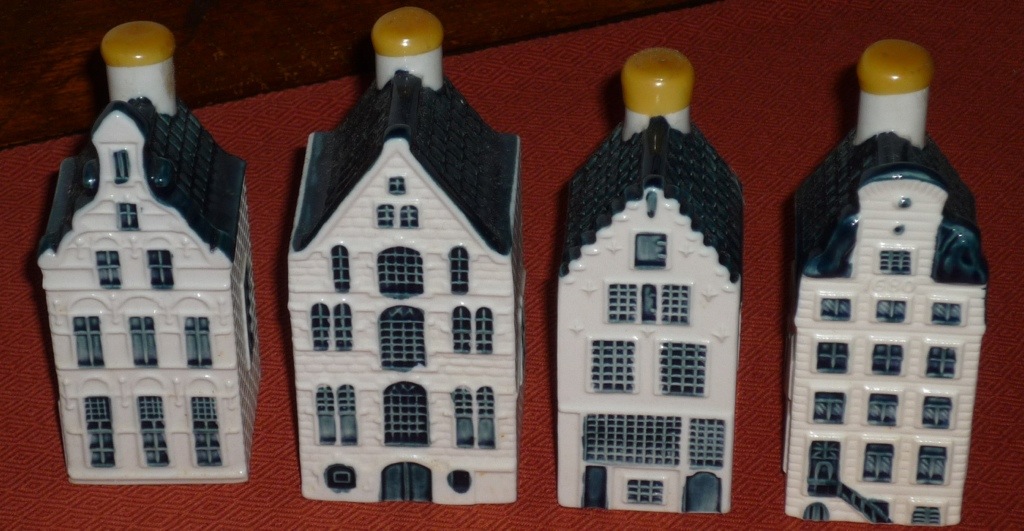
The delft houses above were gifts from KLM Royal Dutch Airlines when we emigrated to Australia in 1998.