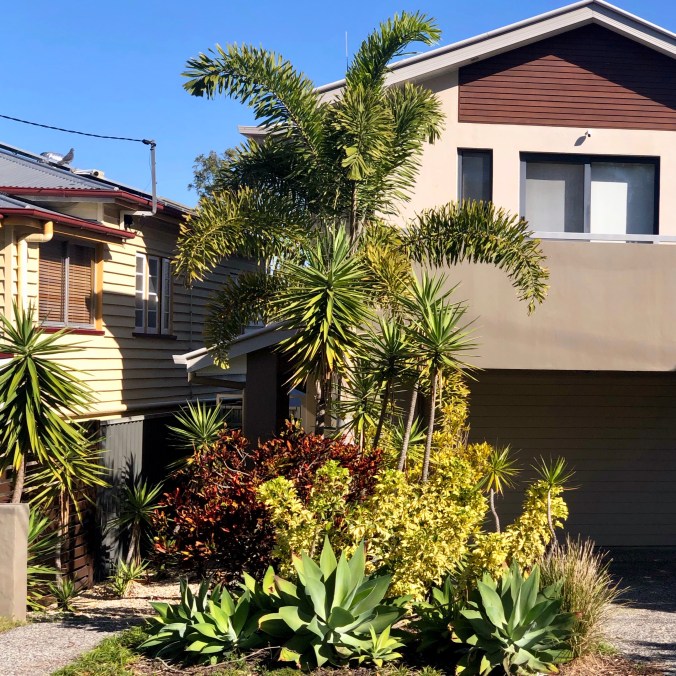
I like the simplicity of this front garden in Balmoral, Brisbane. Plants include:
- Foxtail palm
- Croton
- Yucca
- Something variegated
- Agave
I like the simplicity of this front garden in Balmoral, Brisbane. Plants include:
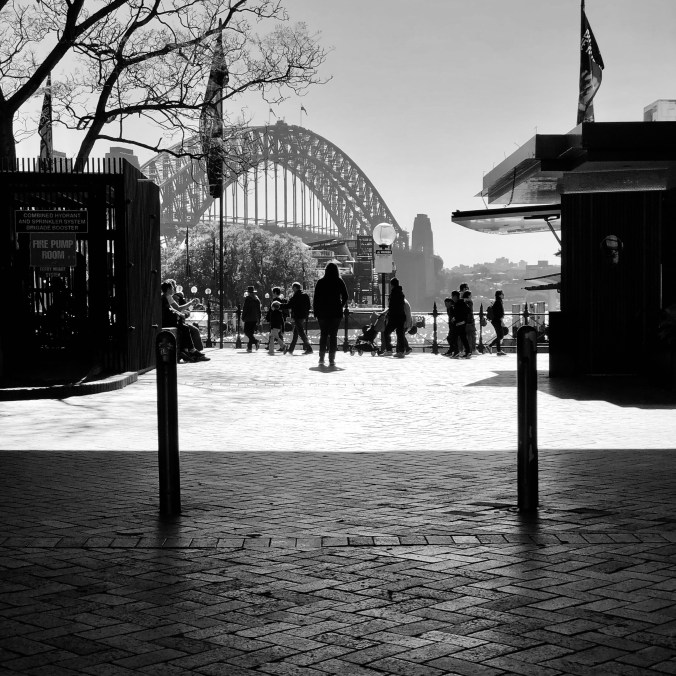
Almost a year has elapsed since we moved from Sydney to Brisbane. A morning stroll from Central Park took us through UTS (University of Technology Sydney). Gazing at the final touches of the rebirth of Building 2, my mind wandered to memories of the eleven plus years of mostly enjoyable work time spent there.
Our transversal of Darling Harbour allowed a glimpse of the boat show, gently bobbing in Cockle Bay.
Ambling down George Street alongside the ‘soon’ to be commissioned tram tracks, my thoughts turned to reminiscing the good times, hosted in venues that are being replaced.
The two-hour journey ended at Circular Quay. As we approached, the Harbour Bridge and Opera House emerged gracefully, appearing to shake off the shackles of the surrounding structures of transportation and wealth. Claiming their place as man made jewels atop the deep blue sparkling water of Port Jackson.
Related posts:
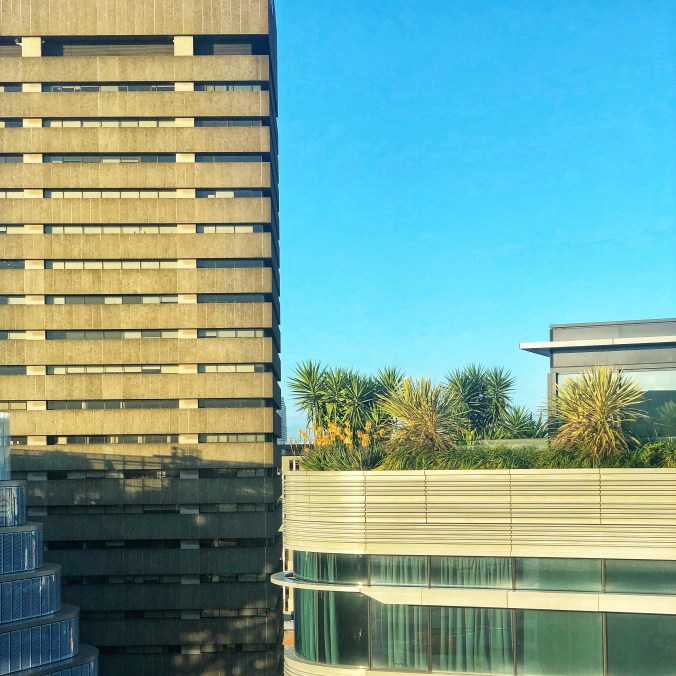
View of a roof top garden from the 18th floor of Four Points Sheraton, Sydney.
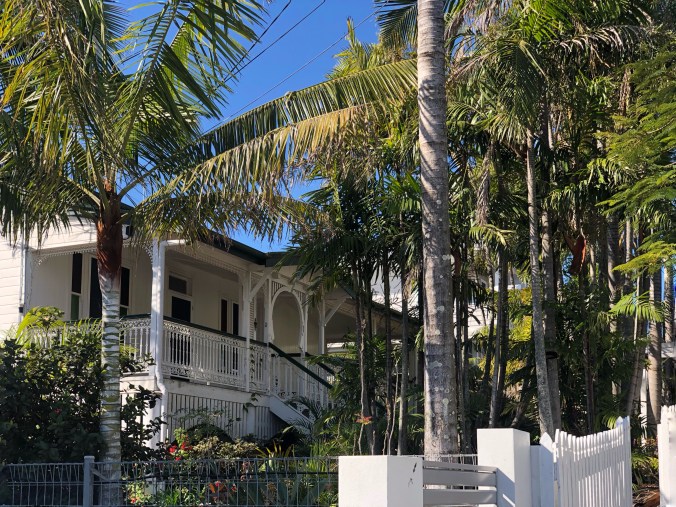
Winter’s day, downtown, Morningside, Brisbane.
A great example of a late Victorian Queenslander house, nestled among palm trees.
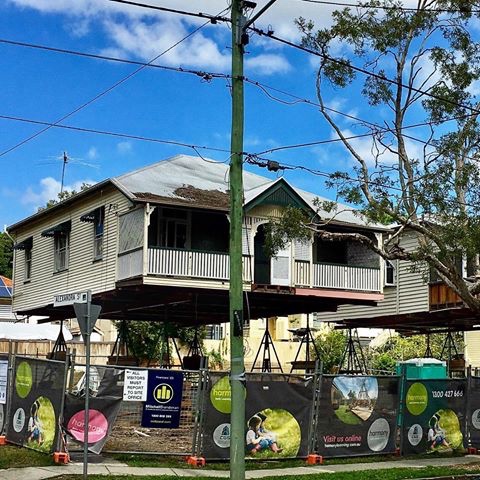
This single storey detached timber home with corrugated iron roof has so far escaped the trend of jacking them up to provide a second story underneath, like the ones shown below.
 Since acquiring a bed on legs, Stan has decided this is his cave. For sleeping, hiding and resting.
 Looking towards Ormiston from Raby Boulevard Park, Cleveland
We are slowly working our way through an unwritten list of places to visit in Brisbane and its surrounds. Having a couple of hours to spare before a late Sunday lunch we headed 23 km east south-east to Cleveland and Raby Bay. A teeny Celsius temperature and gloomy skies, threatening rain were a reminder that Winter had started.
With a population of around 15k, Cleveland is the centre of Redland City, Queensland; end of the line for the train and the start of a ferry journey to North Stradbroke Island.
Stan was happy to explore the trees and grass of Raby Boulevard Park while we watched the antics of the brave on groyne protected beaches.
We will return on another day, when the sun is shining.
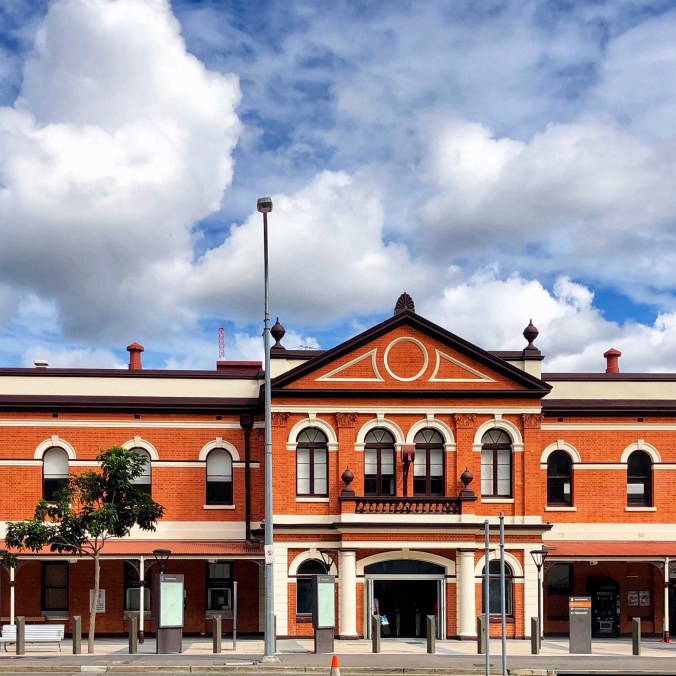
South Brisbane Railway Station was constructed in 1891, opening on 21 December.
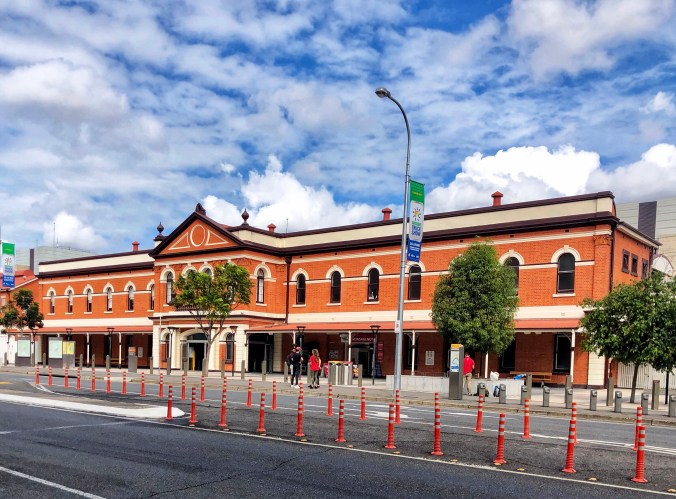 In 1930, South Brisbane also became the site of the South Brisbane Interstate Station, as it was the terminus of the standard gauge railway line from Sydney to Brisbane.
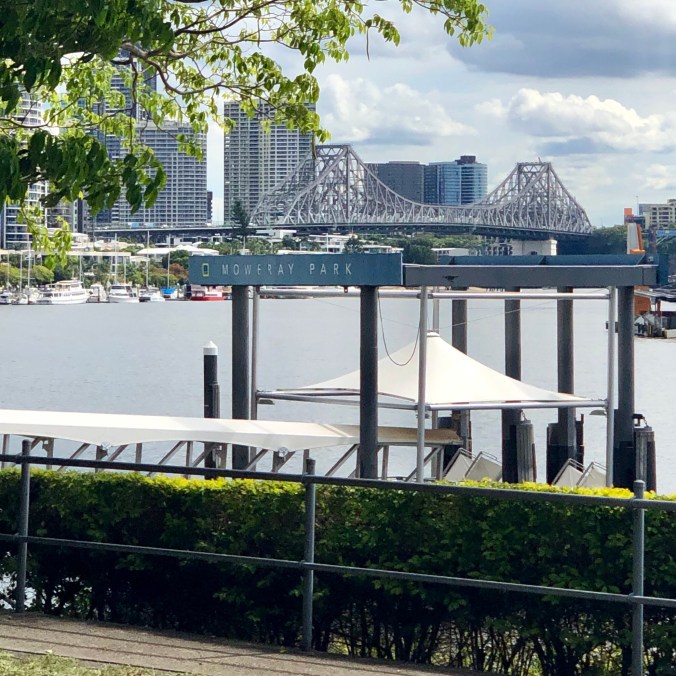 Mowbray Park ferry terminal crowned by Story Bridge, Brisbane, Australia
Uber trips invariably deposit me in the city. As parking is restricted and in high demand I nip over the Story Bridge to take refuge in Mowbray Park, East Brisbane; to await the next call to action.
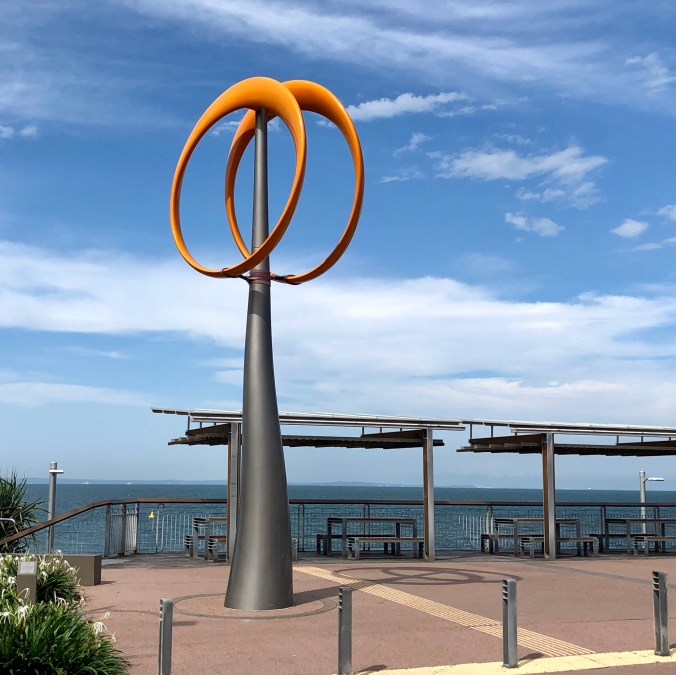
This steel and carbon fibre sculpture (2011) by New Zealander artist, Phil Price is located on the Redcliffe, Queensland foreshore.
Further information about the sculpture and artist is taken from Visit Moreton Bay webpage:
“The concept around OPTO revolves around looking and changing. Looking promotes a sense of place – we can look out over the bay, from the land to the sea, and we can look back to the land, from the sea. Looking can also be interpreted as a metaphor – we can look into the future or back into the past. The form of the sculpture represents a portal – we look through it to a framed landscape, observing the natural and man-made world via the circular scope.
Designed to act as a metaphorical portal, the kinetic rings move in direct relationship to the environment, rotating and spinning in response to the breeze from Moreton Bay. Passing over one another, they appear to open and close, changing the framed landscape within the circular form.
OPTO serves as a celebration of this beautiful place: past, present and future.
About the Artist
Phil Price is best known for his kinetic sculptures with many located across New Zealand and Australia. Regarded as the foremost kinetic sculptor of his generation, Phil’s work is widely acknowledged for its breathtaking beauty and extraordinary design.
The main materials used in most of the sculptures are carbon fiber and glass fiber bonded with high temperature epoxy, stainless steel and precision bearings to allow the sculpture to move with the wind.”
 theINFP