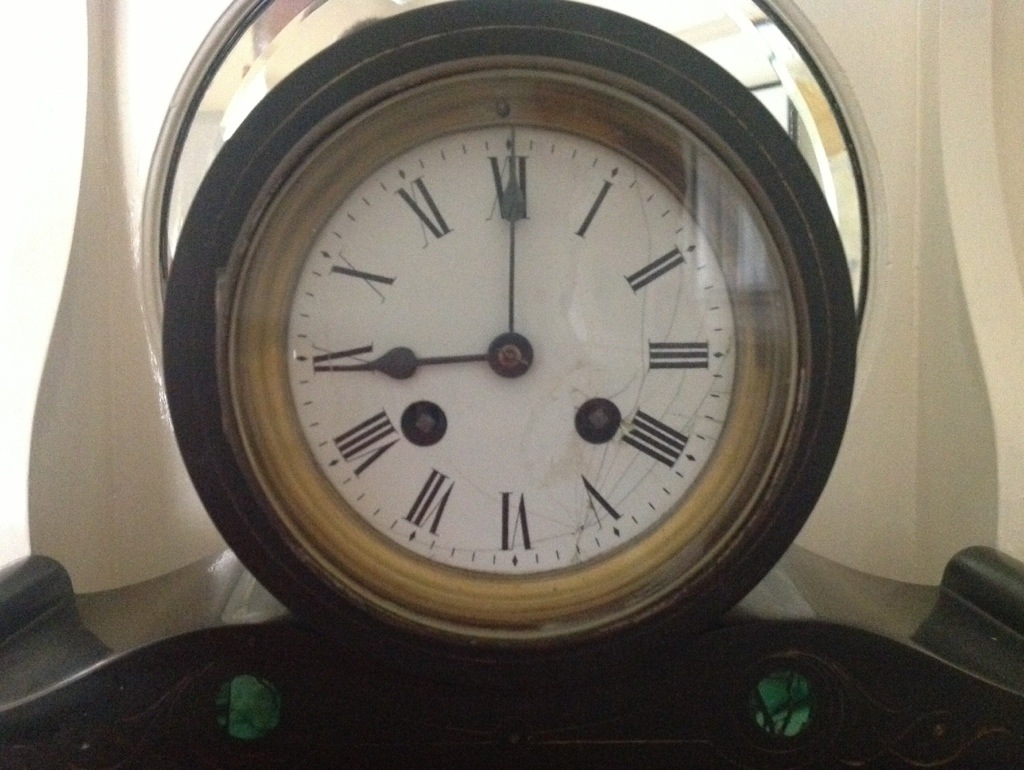
9:30pm early to bed, yawning, tired
1:45am wide awake, tossing, turning
5:00am heater, clicks, ignites, whirring
7:00am late out of bed, yawning, tired
(c) Robert Jones 2013, All Rights Reserved
9:30pm early to bed, yawning, tired
1:45am wide awake, tossing, turning
5:00am heater, clicks, ignites, whirring
7:00am late out of bed, yawning, tired
(c) Robert Jones 2013, All Rights Reserved
One of the things I’ve been looking at lately is the continuity between the ancient Egyptian nature and worship of Isis and its later expression when Her religion spread throughout the Greco-Roman world.
There are many such points of continuity, in my opinion, but one that caught my attention recently is Isis’ enduring expression as a Lady of Light.
The ancient Egyptians held Festivals of Lights in which the entire town or city would light oil lamps that would burn throughout the night—entirely equivalent to our own stringing of lights at Halloween or Yule. (My imagination sees Egyptian neighbors vying with each other over elaborate displays of lights.)
The historian Herodotus (5th century BCE) writes about such a Festival of Lights at Sais, the city of Neith. He says:
“At the times when they gather together at the city of Sais for their sacrifices, on a certain night they all…
View original post 664 more words
I normally hold off getting up to join the jostling sardine packed aisle when a flight lands. As I was sitting next to the aisle and near the front of the plane on my return to Sydney on Thursday, I squeezed myself into the melee. With a backpack and duty free bag in hand I headed for the door and alighted.
While contemplating the meaning of life during my journey on and off the travelators, I became aware of a man who had been trying to elbow his way past me on the plane. Judging by the focussed look on his face and a head down stance he seemed eager to be the first to reach passport control. Whatever, I thought and quickly forgot about him as I negotiated the SmartGate using the shiny new ePassport, property of the Australian Government.
I took my time to walk to the luggage claim area. From experience I know that the bags take a while to commence their journey around the carousel. As I approached the belt I noticed a solitary person strategically placed next to the where the bags appear. Yes you guessed it the overtaking passenger was the first person to stake his claim next to the conveyer. Why? I wondered to myself, do people feel the need to push, rush and shove past others, only to have to wait for their bags, then to queue to exit customs? The irony is that my bag came out first.
After a few disappointing exhibitions in Australia, I had low expectations of Andy Warhol at Te Papa Museum in Wellington, New Zealand. I am happy to say I enjoyed it. It was good to see early pencil sketches along with the predictable famous portraits.
The highlight for me was the Silver Cloud and Cows installation. Large helium filled rectangular shaped silver pillows gently float above and around. The pink cow head on yellow wallpaper is reflected on the surface of the inflated silver oblongs. I found the ever changing surfaces calming.
A fellow blogger has pictures:

You would think that with all this time on my hands that I would be focussed, disciplined and totally capable of completing my lesson and meditating. Where has the time gone? It is not like I have been watching the television every night. Okay I have posted a few things on this blog, been diligent with attending workshops, key note speeches, an extended special interest group on psychological well being and resilience, and surprisingly for me talked to people I don’t know.
I have had difficulty sleeping the whole time I have been in Wellington, last night was no exception. Today I’m looking forward to heading home to Sydney. My bags are packed and I’m ready to go; checkout time isn’t for another hour and I know that I will have to wander around aimlessly once I have given up the temporary sanctuary of my room.
Luckily I have time to go back to Te Papa Museum to visit the Andy Warhol exhibition and do some shopping before heading off to the airport. I managed to secure an aisle seat on the flight so I won’t have to sit squashed against the wall of the plane. I wonder if I will need to contend with a fellow passenger who is as free with their elbows as the woman next to me on the flight to New Zealand. I don’t understand why the seats are not designed wide enough to accommodate me. The prospect of being bashed by passages walking backwards and forwards and the trolley doesn’t fill me with glee.

Walking away
Running towards
Moving aside
Gliding aloft
Circling downwards
Rolling around
Cruising beyond
Flying above
Jumping beneath
Skipping along
Crawling inside
Swimming below
Sitting alone
(c) Robert Jones 2013, All Rights Reserved
Picture taken by HG, Melbourne
Alone, I seek out company,
When in a crowd I welcome space.
In heat of the day I long for cool,
When the night chills I look for warmth.
Tired, I gratefully go to bed,
When I’m away I yearn for home.
(c) Robert Jones 2013, All Rights Reserved

Reading about the deforestation of The land in the Museum of New Zealand Te Papa inspired me to find out more:
“Around 1000 AD, before humans arrived in New Zealand, forest covered more than 80% of the land. The only areas without tall forests were the upper slopes of high mountains and the driest regions of Central Otago. When Māori arrived, about 1250–1300 AD, they burnt large tracts of forest, mainly on the coasts and eastern sides of the two main islands. By the time European settlement began, around 1840, some 6.7 million hectares of forest had been destroyed and was replaced by short grassland, shrubland and fern land. Between 1840 and 2000, another 8 million hectares were cleared, mostly lowland or easily accessible conifer–broadleaf forest.” (1)
“One of the largest and longest-living trees in the world, New Zealand kauri (Agathis australis) belongs to the ancient conifer family, Araucariaceae. Kauri’s final size depends on site and conditions, but heights average 30–40 metres and trunks can reach several metres in diameter. By 600–700 years of age, kauri reaches an average diameter of over 1 metre. Kauri can survive for 1,000 years or more (with an average diameter of 2 metres), but trees older than 1,700 years (average diameters over 3 metres) are now rare.
In just over 100 years, logging and burning transformed the northern landscape from forest to farmland. By the early 1900s, most kauri forest had been logged. Although there was growing concern for the survival of remaining native forest, the high value of kauri timber meant that the forest was still exploited. A final push to extract the last of the kauri swept through the north in the 1920s and 1930s, reducing the forest to the few patches that survive today.” (2)
The image of Queen Elizabeth II on the face of these coins link the currency of New Zealand to the UK, my place of birth. For me these metal shapes represent the destructive power of humanity over nature and their fellow human beings in seeking material wealth. They exist because man mined metal from the Earth. Gold and silver are symbolic of the Sun and the Moon all three are essential for life as we know it; what a paradox.
References
(1) John Dawson. ‘Conifer–broadleaf forests – Loss of conifer–broadleaf forests’, Te Ara – the Encyclopedia of New Zealand, updated 8-Jul-13
URL: http://www.TeAra.govt.nz/en/interactive/11674/deforestation-of-new-zealand
(2) Joanna Orwin. ‘Kauri forest’, Te Ara – the Encyclopedia of New Zealand, updated 11-Jun-13
URL: http://www.TeAra.govt.nz/en/kauri-forest

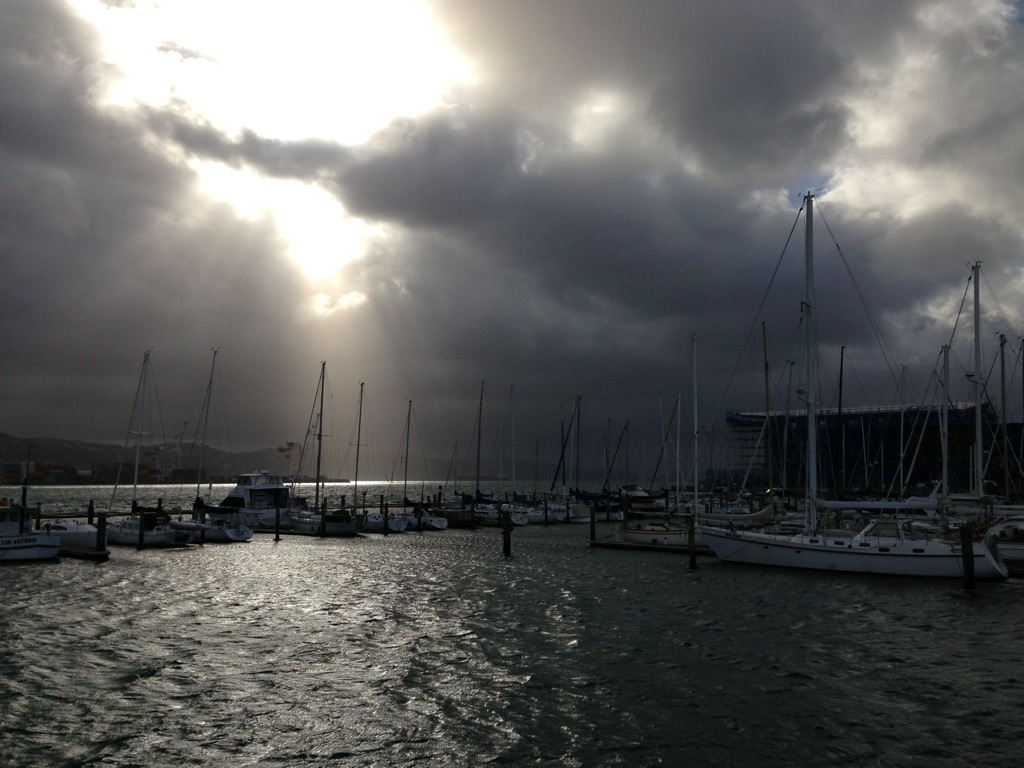
Sunday’s storm clouds over Lambton Harbour, Wellington, New Zealand did not result in rain.
This afternoon the opposite has been forecasted.
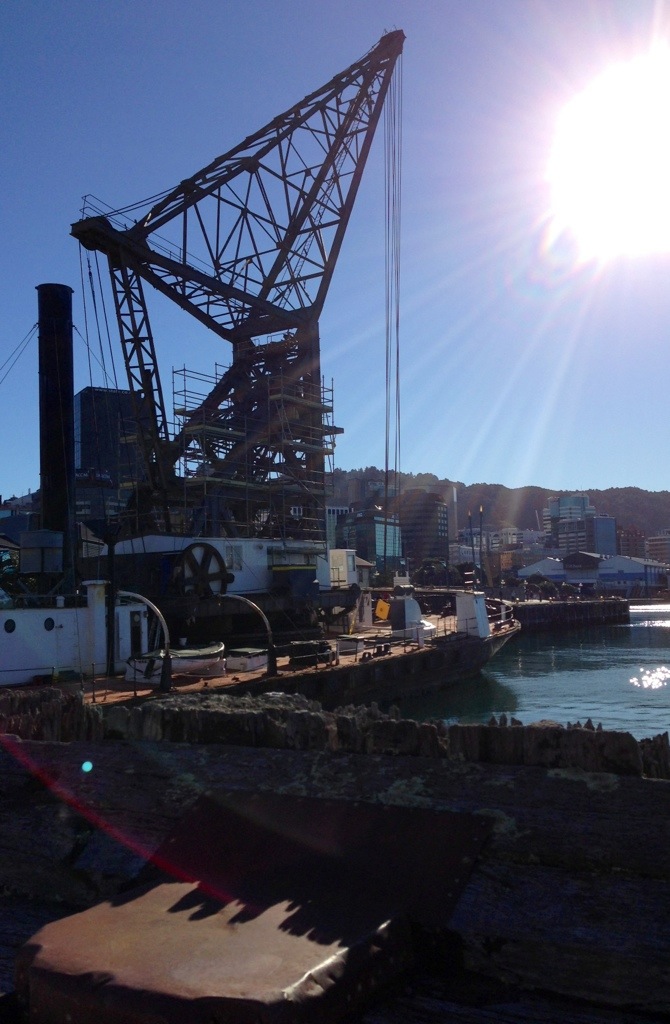
After the stormy skies yesterday, Lambton Harbour, Wellington, New Zealand was as still as a mill pond today.

 theINFP