
Sydney, Australia, is midway through Winter. This tree hanging onto its russet leaves is a welcome relief from a grey sky.
Australia
Winter Sunset, Sydney

NAIDOC, Sydney, Australia
Tomorrow morning I join with colleagues, students and the community to raise a flag to mark the beginning of NAIDOC week. We will acknowledge the Bidjigal people, traditional custodians of the land. We will also pay respects to the Elders both past and present of the local Aboriginal Community and extend that respect to Aboriginals attending.
Around 8,000 years ago near to the University where I work, Aboriginal people would gather at a campsite. They would hold meetings, teach and share knowledge. Aboriginal groups emerging in the 1920’s sought to increase awareness in the wider community of the status and treatment of Indigenous Australians. The National Aborigines and Islanders Day Observance Committee, NAIDOC, is a celebration of Aboriginal and Torres Strait Islander cultures and an opportunity to recognise the contributions of Indigenous Australians in various fields.
The Indigenous Programs Unit, Nura Gili, provides pathways for prospective Indigenous students to study in all UNSW faculties and programs. They also provide a range of Indigenous student support services, tutorial and study spaces for enrolled students.
The Hub, part of Student Life and Learning and Nura Gili will be providing an opportunity for students, staff, volunteers and community members to engage with each other. To celebrate the achievements, history and culture of Aboriginal and Torres Strait Islander People.
Serving Country: Centenary and Beyond is the theme of NAIDOC this year. It will honour all Aboriginal and Torres Strait Islander men and women who have fought in defence of country. From warriors in the Frontier Wars to warriors who have served with honour and pride in Australia’s military conflicts and engagements across the globe. This coming week seeks to highlight and recognise the role they have played in shaping our identity and pause to reflect on their sacrifice. We will celebrate and honour their contribution to our nation.
I am honoured to be part of a tradition that acknowledges and raises awareness of the past and continuing contribution of the Aboriginal and Torres Strait Islander people to Australia. The future of this heritage is in the hands of all that participate in NAIDOC week in 2014 and the years to come.
Yule in July

The flowers on a pine tree remind me of Christmas. Sydney, Australia, winters spoil us with blue skies.
Poinsettia time
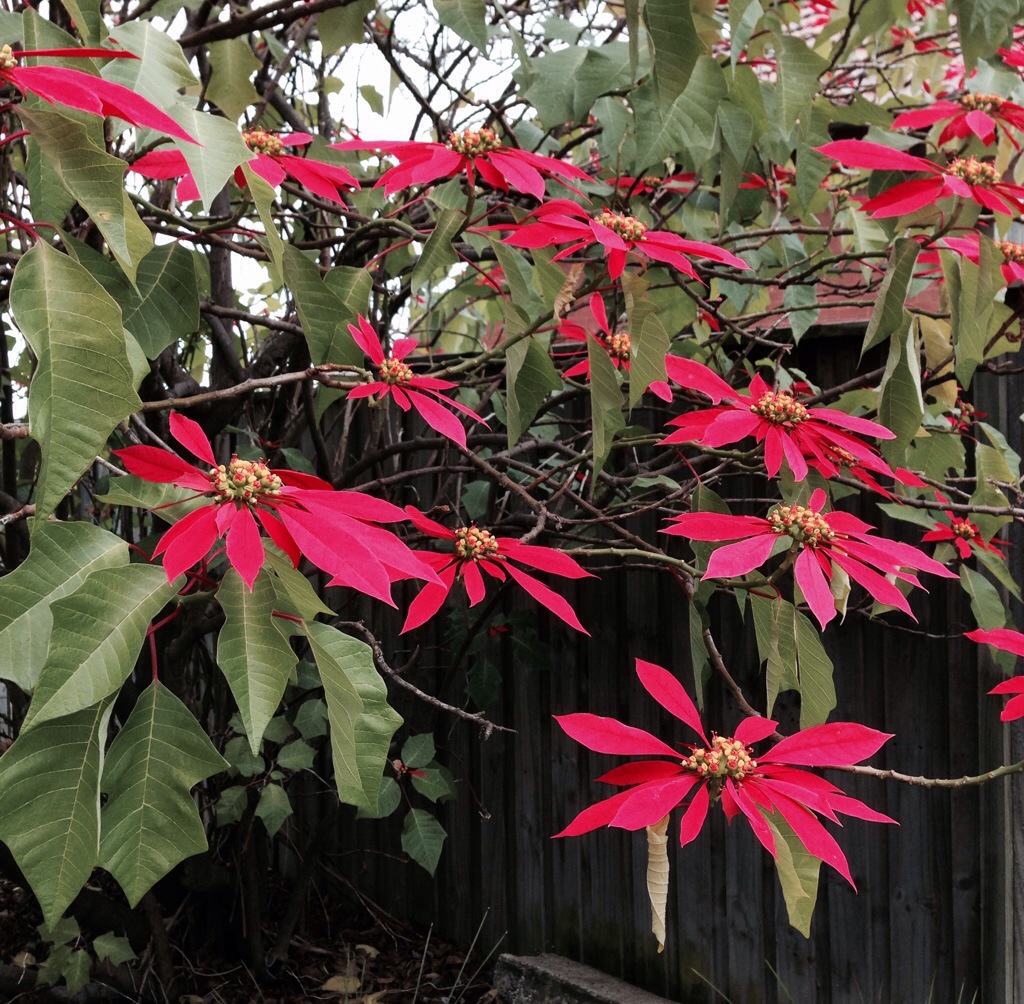
The colour came out more pink than red. I used a fade filter to tone down the pinkness.
Vivid House
The official Sydney Opera House Vivid video with light and sound. Around 15 worth watching and listening minutes.
Play Me

The former Customs House, on the corner of Alfred and Young streets completed in 1845, was altered in 1887 and 1903. Conservation and renovation of the building took place 1995 to 1997.

Photographs from Vivid Sydney – a festival of light, music and ideas.
More information is available here:
http://www.sydneyarchitecture.com/ROC/QUA05.htm
http://www.vividsydney.com
Standing tall

The AMP Building on the corner of Alfred and Young streets was Sydney’s first skyscraper. Completed in 1962 it was designed by Peddle Thorp and Walker.
Photograph from Vivid Sydney – a festival of light, music and ideas.
More information is available here:
http://www.sydneyarchitecture.com/ROC/QUA11.htm
http://www.vividsydney.com
House of the blues

Sydney Opera House (1957 – 1973) is a masterpiece of late modern architecture. It is admired internationally and proudly treasured by the people of Australia. It was created by young Danish architect, Jørn Utzon.
Photograph from Vivid Sydney – a festival of light, music and ideas.
More information is available here:
http://www.sydneyoperahouse.com/about/house_history_landing.aspx
http://www.vividsydney.com
Cameras ready

Onlookers focussed on the Opera House, Sydney.
More information:
http://www.vividsydney.com

